In the fall of 2024, I attended a California Writers’ Club meeting in Pacific Grove, CA. My friend David Harris—president of the San Francisco Peninsula branch and a fellow member of my critique group—was there to share his wisdom on getting published with the Pacific Grove crew. I landed a front-row seat and struck up a conversation with a guy, David Olsen, two chairs down who wrote horror and mystery. He asked what I wrote.
When I said I was working on a collection of surf stories, along with pieces about AI and robots, he lit up. “I like surf stories,” he said. Turns out, he was the editor-in-chief of Kelp Journal, a literary magazine based in Pebble Beach.
I later submitted a piece called Time to Surf, inspired by a moment surfing the Pump Station break at Pacifica State Beach. I’m thrilled to share that the story has been accepted and was just published in Issue 13, which was released this month.
Noyo Review is the literary journal of the Mendocino Coast Writers’ Conference, an annual gathering of writers held on the beautiful Mendocino Coast of northern California.
I started the story while studying at the Writers Studio San Francisco. It was inspired by Jennifer Egan’s opening story in her novel, A Visit from the Goon Squad. “My Hula Girl” is about a grieving man whose treasured memento of his late wife sparks a conflict that forces him to confront his loss, his identity, and the lengths he’ll go to defend what little he has left.
It was just me and 4,400 of my closest writing friends. At 11:59 PM Friday December 8 I got my assignment. To move forward to round 2 I had to finish in the top ten of my group. There’s roughly 27 people in each of a lot of groups. Participants get 48 hours to submit a 250 word story that satisfies three criteria of Genre, Action, and a Word.
Group: 77
Genre: Horror
Action: Watching someone steal
Word: Hope
I started a story at the Writers Studio San Francisco, in 2014, about a guy who was so stoned on Vicodin that he didn’t feel chopping off his finger. The exercise was to write a story about something awful from a distant, dispassionate, even humorous voice, imitating Lorrie Moore’s tone from People Like That are the only People Here. I loved the exercise though it was greeted by scratching heads when I presented it in my spec fiction group ten years later. I tightened it up, added a bit of hope, a stolen finger, and submitted it to NYC Midnight Microfiction Challenge 250.
Semi-Sweet Sixteen
With Vicodin and iPod, he chops carrots for the cake. A hard one gives him trouble. He sharpens the knife on a long silver steel, then gives another go. Slick as snot it chops right off, but he feels a pang of regret as something red stains the neat stack of bright orange carrot spikes. He rinses and pats them dry with the hand that isn’t red. He doesn’t feel the missing digit.
His sister hopes to win the sweet-sixteen cake contest. She sees the red digit among the choppings on the floor, and steals it into her pocket. Mother will be so proud. The cake is round with sixteen carrot spikes, each flash-frozen, and dipped in semi-sweet chocolate. She plucks one carrot from the cake, pulls the finger from her pocket, and pushes it into place as Mother slinks into the kitchen.
“The finger makes the cake” Mother says. “Where did you find it?”
“On the floor with the carrots.”
“Has your brother asked for it back?”
“He’s still chopping. I don’t think he’s noticed.”
“Take a photo of the cake then get a cardboard takeout box. Wipe the frosting from the finger. Wrap it in kale. Pack it with ice. A dash of salt may arrest the decay.”
“Should I show it to him?”
“Just tell him he’s hurt. Wrap his stub. Have him hold the box. Carefully walk him to the clinic. But post the pictures before you go. Entries are due before dark.
#
On February 8, late in the day, I thought I’d been cut. The email came late and I finished in tenth place. Just good enough to make it to round two.
#
Beside getting a deadline to get my full attention on a writing project, every entrant gets feedback from several judges. Here’s what they had to say about Semi-Sweet Sixteen.
”Semi-Sweet 16” by Tom Adams – WHAT THE JUDGES LIKED ABOUT YOUR STORY – {2319} If the Addams Family ever had a cooking show on the Food Network, it would look something like this droll black humor story. I thought the brother was weird for not noticing his missing finger, but his sister was weirder for sticking the severed digit on the cake, and their mother was the weirdest of the three of them for being delighted at the macabre turn of events. {2092} The callous nature of the mother’s conversation with her daughter adds a bit of tension to the ending of the narrative. {1955} Well, that turned out unexpected! I was glad the mother and sister wanted to have the brother’s finger reattached—that showed they care about him (nice dialogue here, too that helped understand their dynamics). Also, the fact that he’s making the cake in the first place reflects how they feel about each other (they care). The mother calmly talking about entering the cake contest first before addressing his injury shows they’ve been here before with previous injuries. WHAT THE JUDGES FEEL NEEDS WORK – {2319} Obviously, this isn’t your average suburban family, and I wondered if their life outside of competitive baking was as outré as their taste in pastries. Perhaps you could trim the sentence about the brother’s knife-sharpening in order to offer a few details about their appearance, their clothing, or the kitchen they’re in that would show their skewed mindset applies to all things. {2092} The verbiage and perspective are a bit muddled throughout the narrative. Ex: ‘With Vicodin and iPod, he chops…’ or ‘His sister hopes to win…’ This detracts from our engagement with the story as the motivations of the characters are relatively unclear – beyond the notion of the contest. Consider reworking the story, focusing on one specific character to flesh out while giving more context for why the finger and contest matter so much. {1955} Consider revising your opening sentence. As written, it sounds like the Vicodin and iPod are the tools the character is using to chop the carrots (a dangling modifier). Your story switches from the brother’s point of view (“He doesn’t feel”) to the sister’s point of view (“She sees the bleeding digit”), also known as head-hopping. Consider revising from only one character’s point of view to avoid reader confusion. It would really only take a simple revision, such as, “The bleeding digit sits.” Microsoft Word is showing your story has 246 words so you have a little room to add content if you need to for revisions. You could cut “but” from “Slick as snot it chops right off, but he feels” and break the section it starts into a new sentence.
#
Pretty good feedback if I wanted to take this story further. The 250 Word Microfiction Challenge forces authors to economize on language; say the most with fewest words. My second round submission started at 1800 words.
Second round feedback and ranking due out April 3, 2024.
Darlene used her own stories as writing prompts. It was a great time to let go and see where the prompts led. I found myself deep in my family history from one of her prompts. I submitted and worked with Darlene on, What My Bones Know. It’s the last story in the zine. Darlene referred to my story as the benediction for the publication.
She’s teaching the class again this January. Read about it here. It’s fun, it’s generative, it’s on zoom.
One of my goals for 2023 was to get a story published in the California Writers’ Club, San Francisco Peninsula Branch’s Fault Zone Anthology. I joined the club several years ago and was fortunate to be invited into a writing critique group that included a Pushcart nominee (Tim Flood), a former Reuters journalist (David Harris), and a graphic designer (Doug Baird). All of us have stories in the anthology. Doug produced the cover’s front and back.
The club’s authors wrote fiction, non-fiction and poetry, that spoke to the word Detachment. My story, Ricky the Robot, is a speculative fiction piece about how a build-it-yourself robot helps a young boy cope with the emotional loss of his mother.
Ricky the Robot is part of a collection of short, speculative fiction stories built around a fictitious company named Domestic Alliance. The Domestic Alliance family of companies designs and delivers androids to promote the general welfare, provide for the common defense, and insure domestic tranquility for its subscribers.
The book is published by Paper Angel Press. The Fault Zone Detachment can be purchased here through Amazon on both Kindle and paperback. A hardbound book is due out soon.
I took a three-day Speculative Fiction workshop from Ploi Pirapokin. Three mornings in August we met from nine to noon workshopping two stories a day. What a blessing to have that much time talking with writers about our craft.
I entered the Speculative Fiction contest and won second place for my story, The Tutor. Ploi judged the contest and had this to say about the story.
A bildungsroman featuring recorded regrets, fatphobia, and an A.I. that provides the protagonist with a unique way to process his values.The protagonist’s earlier decision could have resulted in a more drastic consequence, which in turn, would be a deeper catalyst for his changed behavior.”
I’ve made revisions to The Tutor and workshopped it with my Speculative Fiction writing group. With a few more tweaks I’ll send it out; see if there’s an audience beyond my classes.
My parents used to camp on the beach at Morro Strand State Park. We thought about packing their ashes in cute old suitcases and setting them on a camp table to feel the campground again. We imagined mixing their ashes, some of him, some of her, into beautiful bags and thought how fun it would be to walk along the dunes letting their ashes flow on the wind. We could walk through a flock of terns, who would spread the word that these two were back as they flew and parted the sky.
If we could get a moment at the shore to build a mound, set a sand dollar on the top, and let the incoming tide slowly dissolve it into the surf, that would be grand.
We’d hope two western gulls would perch nearby and watch the whole procession. But mostly we’d tune to the presence of their spirits.
We took Norwegian Air out of Copenhagen and landed in Amsterdam a bit late in the day. The train station was a bustling hub of diverse humanity. People looked to come from every corner of the globe. Outside central station it was crowded, rushed, and dirty. By the time we got to our AirBnB, via a 15 minute bus ride, we were sure we’d made a poor decision on where to stay…until we met our host and saw our apartment. Until we woke in the morning to find a green parrot perched in an Elm outside our bedroom window. Until we found the local grocery store had fresh organic produce, eggs with bright yellow yolks, and found the Danish nut and seed bread we’d eaten in Copenhagen. We continued to eat our mostly raw breakfast. I was loving it.
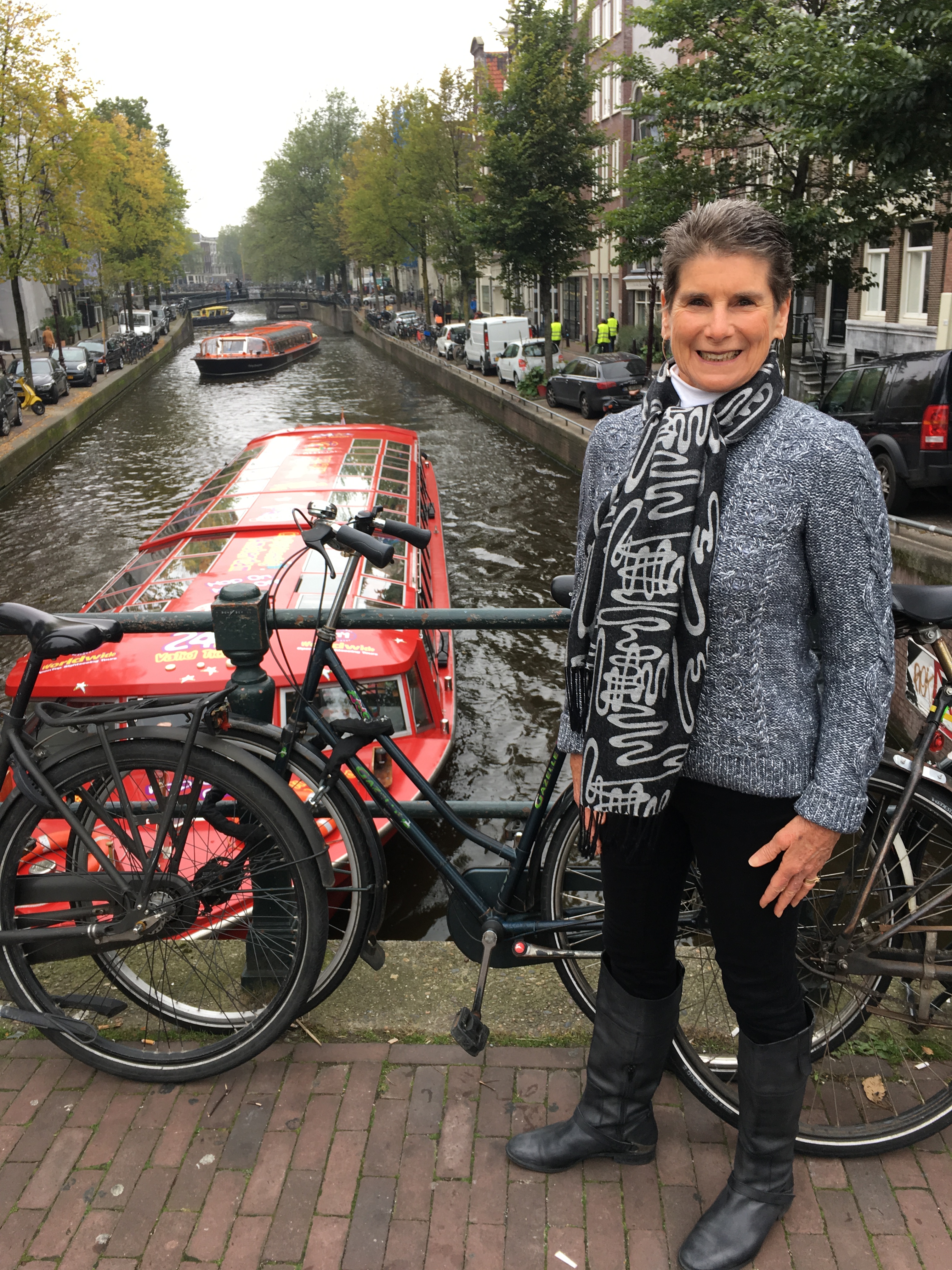
The buses ran prompt and got us around town quite easily. But the streets are the places we found most charming. Strolling hand in hand along quiet canals, as bikes cruised around corners, horse-drawn carriages clopped along the cobblestones, and musicians played music here and there.
Donna loves the bikes.
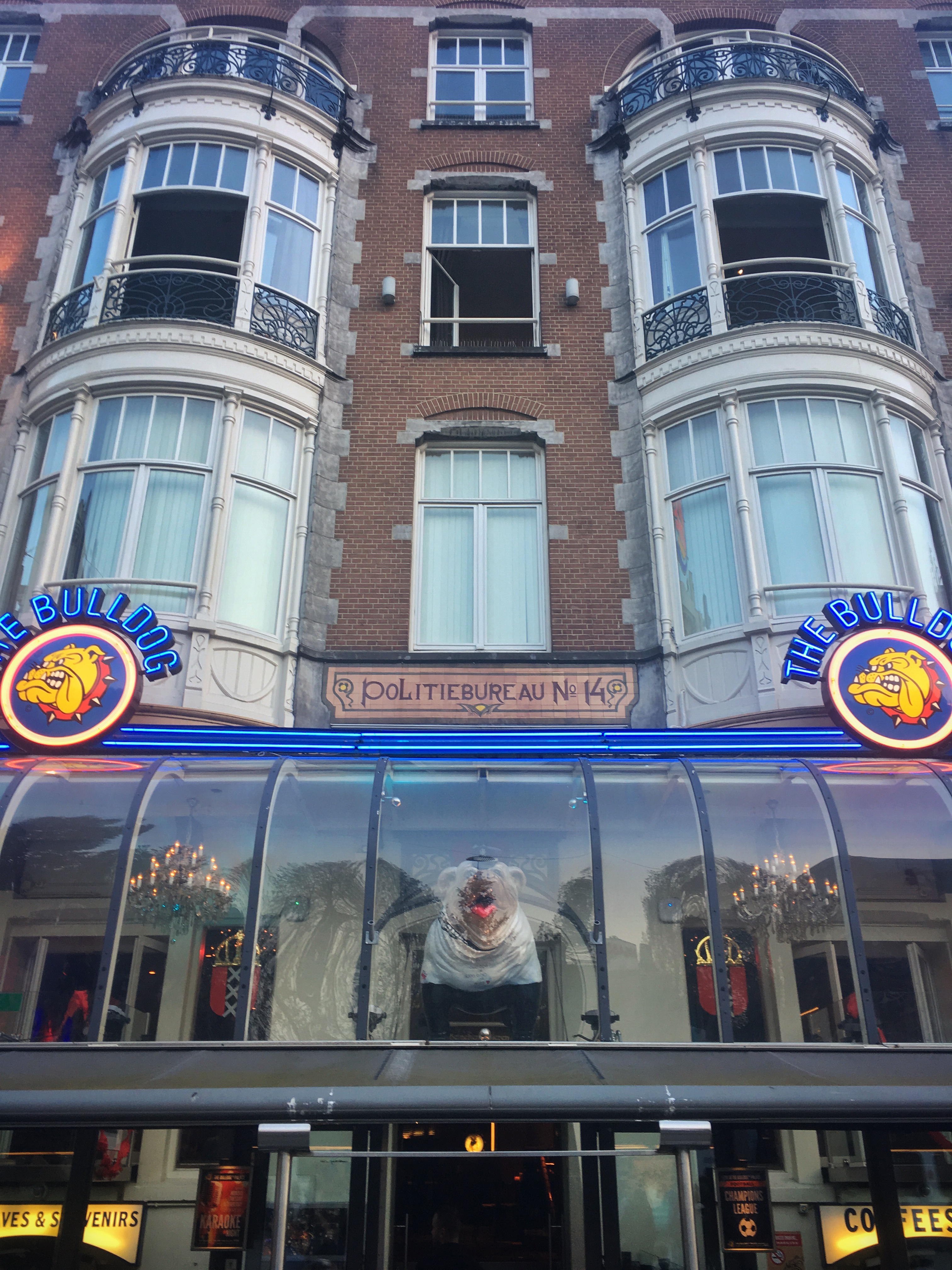
And of course the Coffeeshops, not to be confused with Cafes. Both are plentiful in Amsterdam.We talked with the proprietor of one of Amsterdam’s oldest coffeeshops, The Bulldog, about cannabis edibles and discovered that it’s against the law to make anything with cannabis. Even the lollipops and Spacecake are made with some kind of cannabis oil, with little to no psychoactive properties. He said that once upon a time, Amsterdam was the world leader in progressive medicine, but now they are trailing the likes of California, Colorado, and other US Cities.
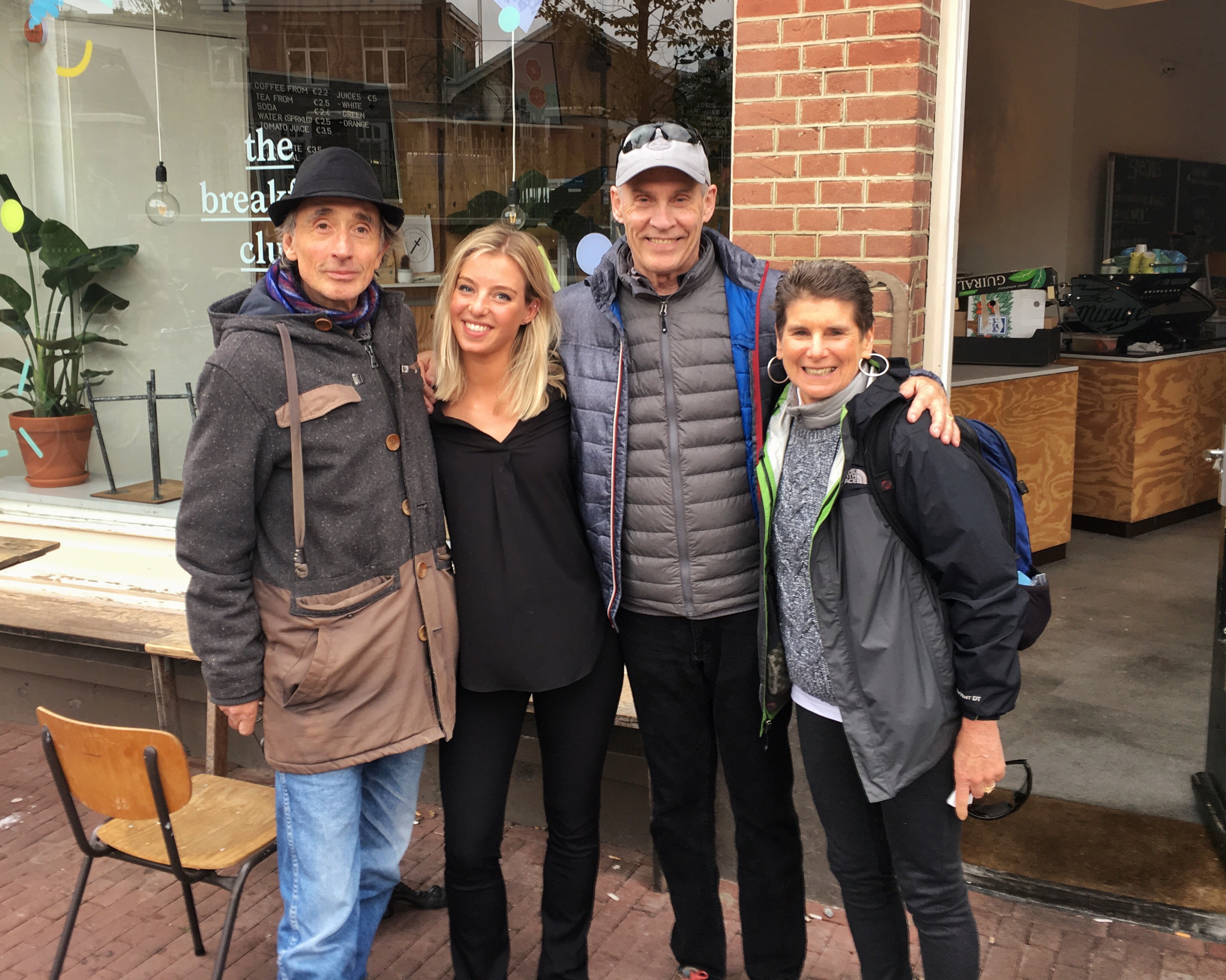
We hooked up with a friend of a friend, Lorand, who lives in the hip neighborhood of Kinnerbuurt. They have a farmers market that runs the length of a pretty long street, and is open every day of the year. Fresh everything. Lorand guided us through enormous food courts inside a refurbished tram repair center. It’s called Foodhallen. It’s spacious rooms, varied aromas, music, and people made it an interesting place to get a bite and feel the vibe. We also discovered a fantastic cafe where I tried fried goat cheese. I thought it was fish. Our cafe host even got in the action.
L-R, Lorand, our host, Tom, Donna
We spent hours touring the Nine streets area where we found cafes, retail stores, canals and reflections, plus the ever-presence of bikes, locked and being ridden.
We walked many streets more than once, and it didn’t seem to matter. There was always something to see, taste, smell. We tried to go to the red light district, but each time we tried, the way there was crowded, and the energy was more than we wanted to handle, so we’d mosey on over to the nine streets area and relax into the non-stop shops and cafes.
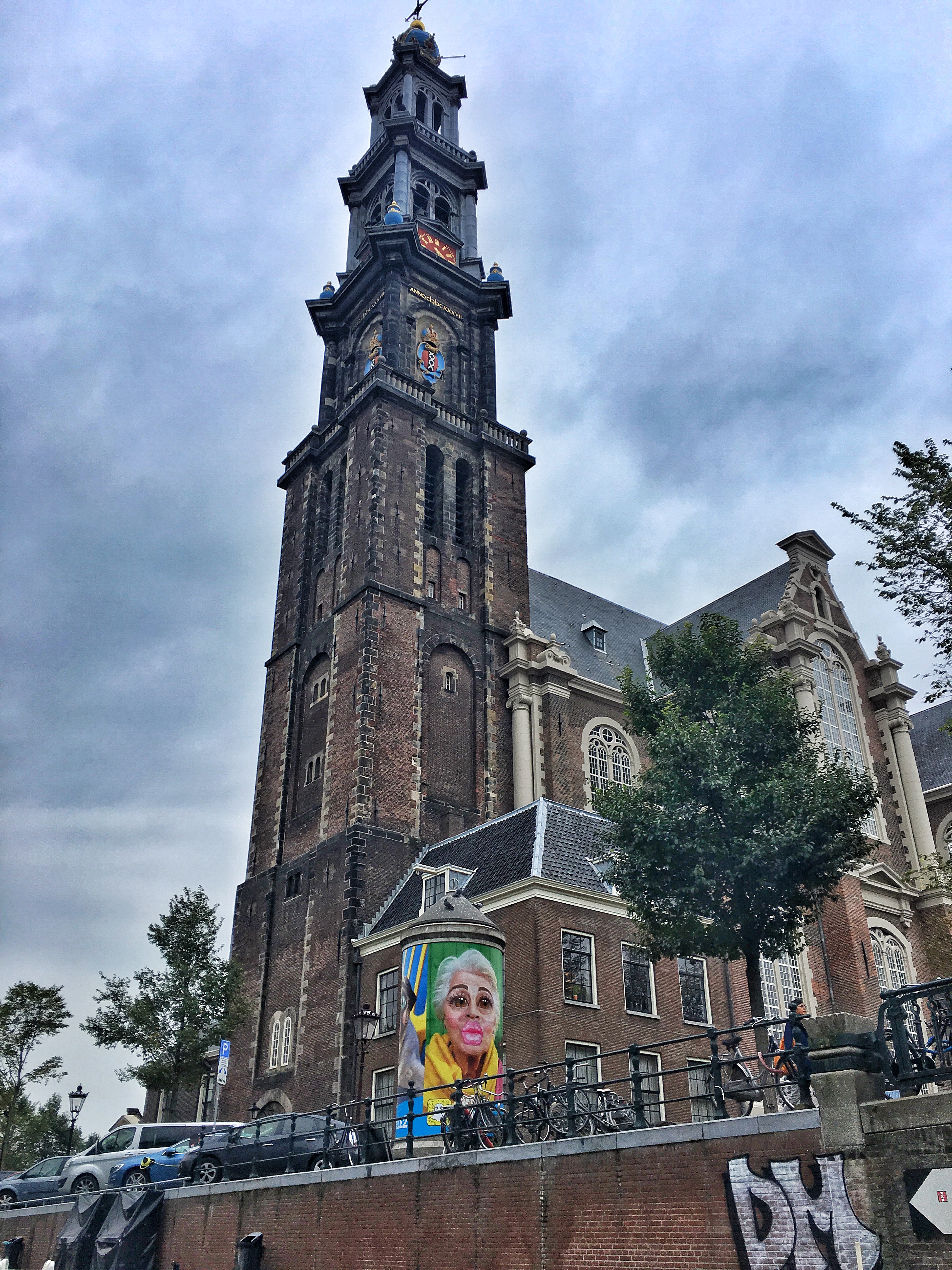
Near Ann Frank house while touring the canals on our last day.
The only activity we planned in advance was Ann Frank’s house, and if I had one word of advice for that tour, see the movie first. We streamed it on Netflix and it gave such a great sense of the cramped quarters, the difficulty of being quiet, and how personality conflicts are amplified by war and confinement. The place is tiny, the stairs narrow, and with wooden floors, it’s practically impossible to keep quiet.
Our second day in Amsterdam we wandered into a souvenir shop to purchase refrigerator magnets and gaze over all the shiny objects.
What a fun store. I thought it must be hard on a shop owner trying to sell high volumes of tiny items to make ends meet. While doing our transaction we asked if he could point us to the Van Gough museum. He asked if we had tickets, and said that it’s quite helpful to purchase in advance, and it’s great to go late in the afternoon to avoid the crowds. He said he could sell us tickets which turned out to be such a great move.
My lack of art history knowledge caught up with me the next day. We took the tram to the museum area when I got the feeling that Amsterdam was bigger than I’d thought. Much bigger. It’s almost twice the area of San Francisco, and larger than all the cities we visited, Copenhagen, Brugge, and Paris.
We walked by the Rijksmuseum and sat in the sun at an outdoor food court with coffee and a nibble. When it was our designated museum entry time we walked a hundred meters or so to the Van Gogh museum. We’d asked about its location a couple of times and were corrected on our pronunciation each time. It’s not Van-Go, it’s Dutch, Van-gawk, but you have to slur the second syllable through the back of your mouth. An acquired skill I think.
We picked up our audio tour gear, and agreed on when and where we’d meet, since we have vastly different attention spans for museum tours. I started the exhibit and was greeted by a large, say 8×12 foot painting of peasants in the field, some mostly sitting, eating, sharpening blades. I’d seen it in art appreciation class in junior college. I moved on to a series of self portraits and learned that he taught himself many techniques by painting himself, as he did not have money for models. I searched for that image when drafting this blog post but never found it. I did find dozens and dozens of peasant paintings, little studies of faces, feet, and folks at work. He was a prolific painter, who took great pleasure in painting the simple life. When I got to the timeline display of his life, I was shocked to tears when I discovered he’d taken his own life.
We spent a bit of time in the tulip museum, in the Nine Streets area, where Donna learned that many of the varieties of tulips they sell won’t do well in our climate, so we waited for home to buy our bulbs. They went in the soil this past weekend. We’ll wait for Amsterdam in our spring garden.
Outside the tulip museum we discussed a book we’d read. Donna confused All the Light We Cannot See, with bits from The Goldfinch. I’ve had a fear that I might lose my wife to dementia. In that moment, I thought it was happening. I started to cry. Donna took me onto the bridge where I tried to talk about it. She reassured me that she is not losing her mind.
I’d love to spend more time in Amsterdam. Such a vibrant city with more to see than can be done in four days. When we returned home I told Donna I wanted to visit Ikea and get a little hit of Scandinavia. We came home with a few odds and ends to keep our trip alive along with a mounted and framed black and white photo of the same image that got me interested in Amsterdam a few years ago. I’d seen it at an executive office on Sutter Street in San Francisco. It was one of several framed images, all done in black and white, of various cities around the world. Each had one element of color. We brought it home from Ikea. It’s lovely next to our fireplace.
Window to Amsterdam in our living room.
Until we return, we have a photo, we buy aged Gouda cheese, and we recount stories real and imagined.
My wife and I get a lot of mileage out of our vacations. From pre-trip planning to the embrace of each city as we’d get to explore them, and then basking in the memories through photos and story telling after we’re home and back to business.
This year, as part of our pre-trip planning, we dove into WordPress Reader posts every morning, before going to work. We continued looking at Reader posts during the trip. We discovered things like the giant wooden sculptures outside Copenhagen, or how best to get to Chatres to visit their famous cathedral.
We booked all our rentals through AirBnB and enjoyed getting acquainted with each city through their photos, maps, descriptions, and tenant critiques. The units got smaller as we headed south. The Paris apartment was very small but what it lacked in size made up for in efficiency, proximity to services and the metro.
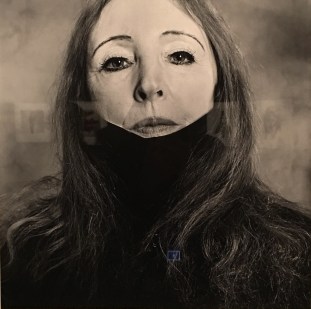
I’d say the world is a better place than it was 10 years ago though there is strife, in our own back yard. But we found plenty of heart, plenty of light. Now Anaïs Nin might disagree, since she did not like this image displayed in the Irving Penn exhibit in the Grand Palais, but I found the photo engaging, personal, and it was my favorite.
Anaïs Nin
But how on earth did we get to Irving Penn? We stumbled upon him in Paris, the same way we found ourselves in Chartres, laughed with Chinese tourists in Amsterdam, and got a museum recommendation from an Iranian in Copenhagen. Our guides were out there and we kept running into them.
Even in Paris, where it’s big and fast, guides would materialize with a regularity that we started to expect. Paris was the only destination where we saw signs of terrorism. Not terrorists, per se, but the vestiges of anti-terror. Police patrol in groups of four, machine guns at the ready and no-nonsense looks.
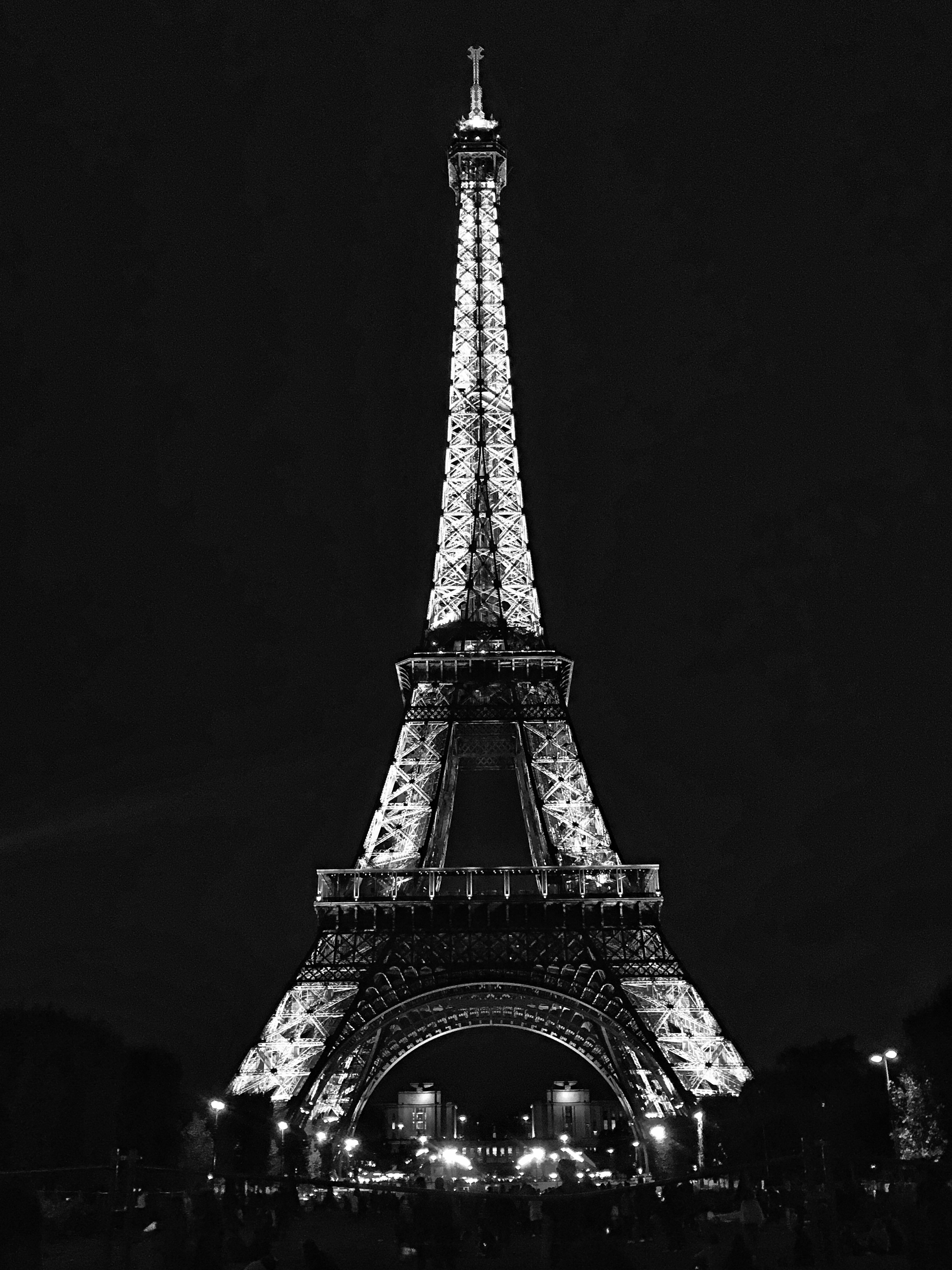
The Eiffel Tower was completely fenced off. If you didn’t have a ticket and cleared security, you didn’t get in. At train stations, large parks, and Notre Dame we saw baret-clad police patrolling the grounds. In Chartres and other prime terrorist targets there were large stone slabs around the perimeter to prevent cars and trucks from getting too close.
I just love train stations like Amsterdam, Antwerp, Montparnasse and Gare de Lyon. The symmetry and size of the old stations is worth a coffee and a few photos. The vanishing lines, the repetition of simple themes to adorn large structures that house the likes of all electric trains that can travel 170 k/h. They leave the station, rolling smooth, gaining speed as the city shrinks from view, and accelerating to love-on-a-fast-train speed through the countryside.
Antwerp Train Station
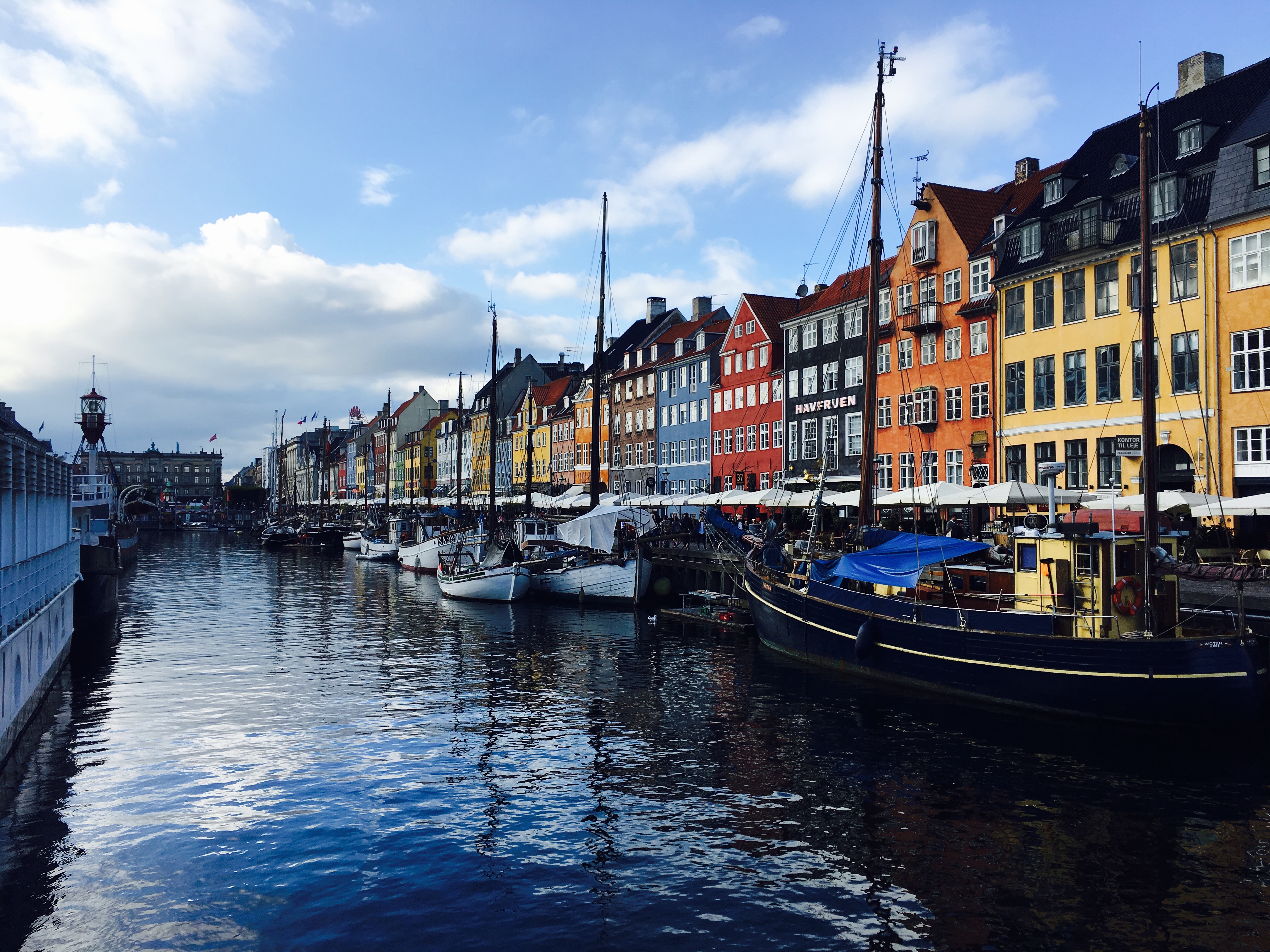
I wasn’t prepared for Copenhagen, but I say that in a good way. I’d done research to find attractions like Tivolie Gardens, Nyhavn, and Paper Island for food choices galore. We walked through Nyhavn and it was a vibrating place with boats and outdoor cafes.
The day after we arrived we decided to let our senses guide us and what guides they were. We found photo ops everywhere, a metro system that connected us with lots of exploration, and a city that has made bike riding an art form. There may be more bikes in Amsterdam, but there are more bikes on the road in Copenhagen, and the bicyclists move along as a well-oiled machine.
I had issues with Musee D’Orsay. People with smart phones and cameras were getting selfies in front of Monet, Renoir, and Manet. But it’s still a feast for the senses with all those impressionist paintings in one place. I had an awakening there a few years back, when I started to cry and couldn’t stop. It started as I approached the Renior painting of Dance at Le Moulin de la Galette.
Dance at Le Moulin de la Galette
I started to get emotional, like the work meant more than paint on canvas or a name on the painting. I’d seen it in books during college, and never thought I’d see it in person. When I walked around the corner there was an enormous painting of a woman on the hill with a white flowing dress and parasol. It overwhelmed me, in a way that I could not then, and can’t quite now, explain. I’ve recounted the story of seeing this painting many times. When I entered the room this year, I found the painting smaller than I’d remembered and there were two, like it had been a study of the same woman in the same dress on the same hill and then I thought that there’s probably more to the story. BUT, this year, after looking over paintings, I was shocked to find that they were not Renoir paintings, but Monet. MONET.
Woman with a Parasol, facing left
We spent three weeks on this trip. A good amount of time to be gone without breaking the bank, or overdoing my capacity to play from late morning until ten or eleven at night. We walked between three and seven miles a day. We’d keep my injured knee happy with a stop for a coffee or a perusal in a charming shop; there were plenty of both.
Pidgeon House, Brugge
In the countries we visited, Denmark, The Netherlands, Belgium, and France we felt a sense of unity; like we belonged to each in our own way. In each country I was mistaken for a local. And it was fun to fit in. But as with all our vacations, it came to a close, and we came home to jet lag, stacks of email, and colds. Tune in as I traverse those steps again, with photo and motion pictures. Let me make my vacation last a bit longer and perhaps give you a short one in your office or home.










 TomAdams.Ink