Kelp Journal Issue 13

In the fall of 2024, I attended a California Writers’ Club meeting in Pacific Grove, CA. My friend David Harris—president of the San Francisco Peninsula branch and a fellow member of my critique group—was there to share his wisdom on getting published with the Pacific Grove crew. I landed a front-row seat and struck up a conversation with a guy, David Olsen, two chairs down who wrote horror and mystery. He asked what I wrote.

When I said I was working on a collection of surf stories, along with pieces about AI and robots, he lit up. “I like surf stories,” he said. Turns out, he was the editor-in-chief of Kelp Journal, a literary magazine based in Pebble Beach.

I later submitted a piece called Time to Surf, inspired by a moment surfing the Pump Station break at Pacifica State Beach. I’m thrilled to share that the story has been accepted and was just published in Issue 13, which was released this month.

Check it out on Amazon and Kindle here.

My Hula Girl published in Noyo Review

Noyo Review is the literary journal of the Mendocino Coast Writers’ Conference, an annual gathering of writers held on the beautiful Mendocino Coast of northern California.

I started the story while studying at the Writers Studio San Francisco. It was inspired by Jennifer Egan’s opening story in her novel, A Visit from the Goon Squad. “My Hula Girl” is about a grieving man whose treasured memento of his late wife sparks a conflict that forces him to confront his loss, his identity, and the lengths he’ll go to defend what little he has left.

Read the story here.

The NYC Midnight 250 Word MicroFiction Challenge Round 1 of 3

It was just me and 4,400 of my closest writing friends. At 11:59 PM Friday December 8 I got my assignment. To move forward to round 2 I had to finish in the top ten of my group. There’s roughly 27 people in each of a lot of groups. Participants get 48 hours to submit a 250 word story that satisfies three criteria of Genre, Action, and a Word.

Group: 77

Genre: Horror

Action: Watching someone steal

Word: Hope

I started a story at the Writers Studio San Francisco, in 2014, about a guy who was so stoned on Vicodin that he didn’t feel chopping off his finger. The exercise was to write a story about something awful from a distant, dispassionate, even humorous voice, imitating Lorrie Moore’s tone from People Like That are the only People Here. I loved the exercise though it was greeted by scratching heads when I presented it in my spec fiction group ten years later. I tightened it up, added a bit of hope, a stolen finger, and submitted it to NYC Midnight Microfiction Challenge 250.

Semi-Sweet Sixteen

With Vicodin and iPod, he chops carrots for the cake. A hard one gives him trouble. He sharpens the knife on a long silver steel, then gives another go. Slick as snot it chops right off, but he feels a pang of regret as something red stains the neat stack of bright orange carrot spikes. He rinses and pats them dry with the hand that isn’t red. He doesn’t feel the missing digit.

            His sister hopes to win the sweet-sixteen cake contest. She sees the red digit among the choppings on the floor, and steals it into her pocket. Mother will be so proud. The cake is round with sixteen carrot spikes, each flash-frozen, and dipped in semi-sweet chocolate. She plucks one carrot from the cake, pulls the finger from her pocket, and pushes it into place as Mother slinks into the kitchen. 

            “The finger makes the cake” Mother says. “Where did you find it?”

            “On the floor with the carrots.”

            “Has your brother asked for it back?”

            “He’s still chopping. I don’t think he’s noticed.”

            “Take a photo of the cake then get a cardboard takeout box. Wipe the frosting from the finger. Wrap it in kale. Pack it with ice. A dash of salt may arrest the decay.”

            “Should I show it to him?”

            “Just tell him he’s hurt. Wrap his stub. Have him hold the box. Carefully walk him to the clinic.  But post the pictures before you go. Entries are due before dark.

#

On February 8, late in the day, I thought I’d been cut. The email came late and I finished in tenth place. Just good enough to make it to round two.

#

Beside getting a deadline to get my full attention on a writing project, every entrant gets feedback from several judges. Here’s what they had to say about Semi-Sweet Sixteen.

”Semi-Sweet 16” by Tom Adams –     WHAT THE JUDGES LIKED ABOUT YOUR STORY – {2319}  If the Addams Family ever had a cooking show on the Food Network, it would look something like this droll black humor story. I thought the brother was weird for not noticing his missing finger, but his sister was weirder for sticking the severed digit on the cake, and their mother was the weirdest of the three of them for being delighted at the macabre turn of events.   {2092}  The callous nature of the mother’s conversation with her daughter adds a bit of tension to the ending of the narrative.  {1955}  Well, that turned out unexpected! I was glad the mother and sister wanted to have the brother’s finger reattached—that showed they care about him (nice dialogue here, too that helped understand their dynamics). Also, the fact that he’s making the cake in the first place reflects how they feel about each other (they care). The mother calmly talking about entering the cake contest first before addressing his injury shows they’ve been here before with previous injuries.   WHAT THE JUDGES FEEL NEEDS WORK – {2319}  Obviously, this isn’t your average suburban family, and I wondered if their life outside of competitive baking was as outré as their taste in pastries. Perhaps you could trim the sentence about the brother’s knife-sharpening in order to offer a few details about their appearance, their clothing, or the kitchen they’re in that would show their skewed mindset applies to all things.   {2092}  The verbiage and perspective are a bit muddled throughout the narrative. Ex: ‘With Vicodin and iPod, he chops…’ or ‘His sister hopes to win…’ This detracts from our engagement with the story as the motivations of the characters are relatively unclear – beyond the notion of the contest. Consider reworking the story, focusing on one specific character to flesh out while giving more context for why the finger and contest matter so much.  {1955}  Consider revising your opening sentence. As written, it sounds like the Vicodin and iPod are the tools the character is using to chop the carrots (a dangling modifier). Your story switches from the brother’s point of view (“He doesn’t feel”) to the sister’s point of view (“She sees the bleeding digit”), also known as head-hopping. Consider revising from only one character’s point of view to avoid reader confusion. It would really only take a simple revision, such as, “The bleeding digit sits.” Microsoft Word is showing your story has 246 words so you have a little room to add content if you need to for revisions. You could cut “but” from “Slick as snot it chops right off, but he feels” and break the section it starts into a new sentence.

#

Pretty good feedback if I wanted to take this story further. The 250 Word Microfiction Challenge forces authors to economize on language; say the most with fewest words. My second round submission started at 1800 words.

Second round feedback and ranking due out April 3, 2024.
Fault Zone: Detachment

One of my goals for 2023 was to get a story published in the California Writers’ Club, San Francisco Peninsula Branch’s Fault Zone Anthology. I joined the club several years ago and was fortunate to be invited into a writing critique group that included a Pushcart nominee (Tim Flood), a former Reuters journalist (David Harris), and a graphic designer (Doug Baird). All of us have stories in the anthology. Doug produced the cover’s front and back.

The club’s authors wrote fiction, non-fiction and poetry, that spoke to the word Detachment. My story, Ricky the Robot, is a speculative fiction piece about how a build-it-yourself robot helps a young boy cope with the emotional loss of his mother.

Ricky the Robot is part of a collection of short, speculative fiction stories built around a fictitious company named Domestic Alliance. The Domestic Alliance family of companies designs and delivers androids to promote the general welfare, provide for the common defense, and insure domestic tranquility for its subscribers.

The book is published by Paper Angel Press. The Fault Zone Detachment can be purchased here through Amazon on both Kindle and paperback. A hardbound book is due out soon.

Mendocino Coast Writers’ Conference 2023

I took a three-day Speculative Fiction workshop from Ploi Pirapokin. Three mornings in August we met from nine to noon workshopping two stories a day. What a blessing to have that much time talking with writers about our craft.

I entered the Speculative Fiction contest and won second place for my story, The Tutor. Ploi judged the contest and had this to say about the story.

A bildungsroman featuring recorded regrets, fatphobia, and an A.I. that provides the protagonist with a unique way to process his values.The protagonist’s earlier decision could have resulted in a more drastic consequence, which in turn, would be a deeper catalyst for his changed behavior.”

I’ve made revisions to The Tutor and workshopped it with my Speculative Fiction writing group. With a few more tweaks I’ll send it out; see if there’s an audience beyond my classes.

I’ve signed up for next year’s conference. Check it out here.

Mom and Dad Loved Morro Strand

packed-and-ready-for-a-beach-walk.jpg

My parents used to camp on the beach at Morro Strand State Park. We thought about packing their ashes in cute old suitcases and setting them on a camp table to feel the campground again. We imagined mixing their ashes, some of him, some of her, into beautiful bags and thought how fun it would be to walk along the dunes letting their ashes flow on the wind. We could walk through a flock of terns, who would spread the word that these two were back as they flew and parted the sky.

If we could get a moment at the shore to build a mound, set a sand dollar on the top, and let the incoming tide slowly dissolve it into the surf, that would be grand.

We’d hope two western gulls would perch nearby and watch the whole procession. But mostly we’d tune to the presence of their spirits.


Rushing Water Held Tightly in Place

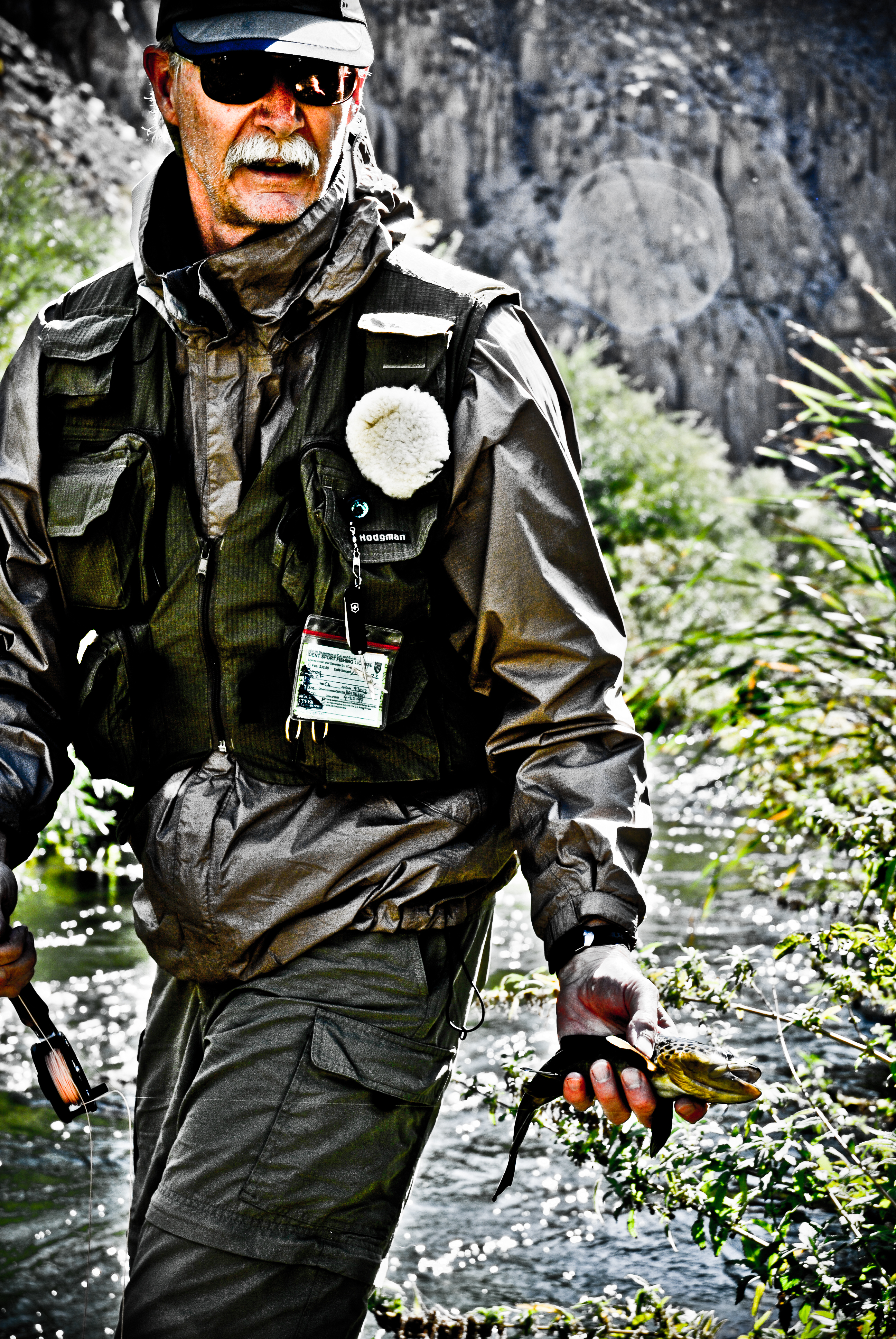
This is flash-fiction-sort-of-memoir prose that I wrote after a fishing trip with my brother a few years ago.  We try to hit the Owens Valley every year or so for fishing, coffee, and sometimes snow. Aren’t all fish stories fiction?

allen-1

We paused at the rim. The chill air was alive with spring sage. The water below, a dark ribbon. A lone string of fog, floated by, as we scouted our descent into the Owens Gorge, some 500 feet below. It was carved by years of river flow. Just water, gravity and time. Allen pointed to a bend in the river, maybe 400 yards from us on the far side of the gorge, his voice, waxed paper on a gritty floor said “Let’s try there?” I’d follow my brother just about anywhere, especially when there’s fish at the end. We picked up the pace, not a race, just a quickening heart-beat, our feet knew what to do. It was slow work. We watched our steps, lest we tumbled or jumbled our gear on a crag. And we’d heard there might be snakes as the gorge warmed up.

We turned the first bend and heard the kingfisher before we saw its streak of blue and white flight. The bird’s cackle brought a sparkle of light, as the first trout rose and splashed, just ahead, where the river turned. We looked back up. Why did it always look steeper going down than from the bottom?

The water made its own music as it flowed free. Loud and boisterous, then a meandering melody that always seemed to slow me down. We walked carefully on rocky river stones. My brother was a bird sitting on a branch, just watching. His clothing all tan and green, straight out of a fly fishing magazine. This stretch of water ran clear, over smooth rocky bottom, golden green, mossy streaked, and then there was a flash of tail, and another. The sound slapped our ears. The fish were out. They were feeding on the surface.

Allen was the first to assemble his rod. I wasn’t quite ready to fish, still too much in my head, so I got my camera out and made a couple of test shots to check aperture, shutter speed, and ISO. I’d ease into fishing this way. He started with a look around. What would catch him? A branch behind, the reeds in front? He started in close, with a short roll cast, barely upstream. The fly tangled on a reed and with a flick of the tip of his two weight rod, the fly flipped over backward and landed softly in a tiny eddy just downstream from the reed. Schwack! A solid 14 inch German-Brown trout flung itself against the parachute Adams, but left the fly unscathed and still floating. Allen looked my way and laughed.

He took two steps, and casted again, just ahead of the reeds. I managed to get a shot of the fly landing softly right behind a rock. It looked perfect to me, but he picked it up for two short false casts, to dry the fly. Then fluid poet on a rocky river, he slipped the fly into the seam at the head of the pool. The current curved the fly like a crescent moon as a tail flashed, a mouth grabbed and the rod tip pointed instinctively to God.

The trout reared its head and exploded from water, turned gently and seemed to hang in the air, then came down with a splash. It sent spikes of spray. It landed hard a wet crash. The line ripped off the reel spraying Allen’s glasses and face. A quick swipe from his sleeve and he sees the fish heading down stream. The fish, heavy now with the weight of the current, headed straight for a log. Allen ended it. He pressed his palm against the reel. Pulled the fish to a stop, a moment before the log. Will the line snap? With one power move the fish could set free, but the line held, the fish tired. He reeled it in quickly for a moment of fame and an upstream release so this fish could meet another day.

Daily Prompt: Fishing

Hanalei Blues (fiction)

img_2735

The end of September brings Hanalei back to the locals. There are still tourists. There are always tourists, but they thin as the air cools; as the days grow shorter. And most tourists fear the looming possibility of heavy rain, flash floods and large waves as the calendar turns toward winter.

The pier belongs to the bay, which is nestled in the Hanalei valley surrounded by steep, irregular ridges, shrouded in a lush tropical green. When the sun strikes the mountains in the late afternoon, the green glows like it’s made of light. Waterfalls streak the north facing walls. They are flash flood monitors. If there are more than 7 it’s time to move the kids, cars, and farming equipment to higher ground. If there are more than 10, just get the kids to the cliffs. There’s no time for cars and equipment.

Waves lap at the pier piles as tourists march along the length of it, sipping drinks and chatting into another sunset. Mano sets the hook on a nice fish, plays it longer than needed, and hoists it to the deck. He strikes a pose against the setting sun, like he is the king of this pier, though much younger than his uncle who has four rods in the water, and sits on a beach chair, sipping something from a plastic mug, ice cubes clinking. Mano is pleased to be seen but acts like the tourists are not there. He steps on the spine of the small hammer head. The shark thrashes and shimmies. Mano whacks it hard on the head with the butt of his knife and lays it out on the picnic bench where two tourists play a game of checkers. A pool of blood gathers under the hammer head. Tourists get close to see the tiny teeth.

The last of the sunset sends the tourists back to the bars, the restaurants, the expensive vacation homes. Mano casts again and speaks in hushed tones to his uncle. They laugh as the last light brings their village back to them.

In the morning, Mano tosses a leash at a tourist who is renting a board from the Green Trees Surf Shop. He intends to startle the tourist, maybe laugh at him, but gets a look of contempt from his co-worker who is filling out a rental agreement. Mano acts like he owns the shop, but is just another worker who seems like a truant. Like he’s not working at the shop even when he’s there.

Mano hasn’t always hated the tourists. Not that it matters, but they sold the house next to his bungalow and now it’s a rental. Tourists come in with their red Mustang convertibles, their tan muscular bodies with slinky girlfriends and think they can do what they want with his beach. They make noise until late at night and their leave their haole trash on the beach.

The tourist, a thirty-something guy from San Diego, sweats as the boards are loaded. A twinge of fear gathers in his gut as he selects a paddle. He’d surfed at Hanalei ten years ago, but not on a stand up paddle board. Not at the reef. He is nervous about looking foolish. He is nervous about falling onto the reef in shallow water. He thinks about sharks.

He surfs for an hour and catches his share of waves. As he paddles to catch his last wave, a movement comes from his right. Mano is paddling an outrigger canoe into the wave. The tourist tries to back off, but it’s too late. He jumps from the board as it slams the canoe.  There is a pause, like the ocean has forgiven them. The tourist pops his head up to see the canoe sliding by, then is pulled under water and dragged behind the canoe. His board is caught on the outrigger. His leash is strapped to his ankle. The weight of the tourist pulls canoe to the left. The tourist breathes water. His knee scrapes the coral reef. The canoe exits the wave with alarming speed. It pitches into the air, nearly flips over, but Mano stands, leans into the wave and settles the canoe into the water. The tourist surfaces and sputters for breath. Mano jumps from the boat and yells at the tourist to unstrap his leash. The tourist thinks he’ll be left without his board. Mano yells again for the tourist to remove the leash, which he does. Mano pulls the leash through the outrigger stays, and pushes the board toward the tourist who is standing on the shallow reef, paddle in hand. Against the setting sun the tourist looks like Neptune. Mano tells the tourist to swim to the board and he does. Mano climbs back into his boat and paddles hard. As he passes the tourist, he stands and slows. The tourist is standing on his board. He does not know what to do.

“Haole dude. Ok now?”

The tourist nods his head. His knees shake as blood drips to the deck of his board.

“Dat some kine ride brah,” says Mano. “Betta you paddle in brah. Sharks like sunset. Sharks like blood.”

Mano paddles toward the setting sun. As blood drips onto the deck, the tourist paddles toward shore, scanning for the fin of a reef shark.

Change Seven Magazine 2.2

change-seven-1

I submitted three flash fiction stories to Change Seven Magazine, and they published them today.  Each story is in some way connected to surfing.

Change Seven is an online literary journal that pays tribute to Dorothy Parker, that feminist dame who was so far ahead of her time that it hurt.

The origin of the site’s name comes from the following:

“It takes me six months to do a story. I think it out and write it sentence by sentence—no first draft. I can’t write five words but that I can change seven.” ~ Dorothy Parker, The Paris Review, 1956

I am honored to have my work in this journal.

The magazine is here                      https://changesevenmag.com/issue-2-2/

The Battle by the Bay

The Giants have been whooped by the As three games straight in their annual battle by the bay.  Tonight the Giants have one more chance.  Back in 1989 this same match up was set against an area-altering event during game three of the World Series.  This is short short fiction about that day from the point of view of a very young not-yet-baseball fan.

On the TV a man with no hair talked about a battle and a bay.  He called a little man a giant.  The little man had black streaks under his eyes.  The TV made a funny noise, then squiggly lines, and then it went black.  Mama Rose took my hand, put Bobby’s hand in mine, and ran from the house.  The screen door slammed.  She took us to the park across the street and set us in swings.  She kept looking up at the trees and wires. She looked at her watch and then looked up and down the street.  She asked us if we’d felt anything.  We both shook our heads.

A woman with bright red hair came into the playground with a little girl and a brown dog.  She asked Mama Rose if she’d seen the news.  Mama Rose said, “Don’t scare the boys.”

“What happened,” I asked, but Mama Rose didn’t look at me.

The red haired woman talked about a game and a stick and a cypress.  She talked fast and looked up at the trees.  Mama Rose asked if her husband was ok.  The red haired woman did not answer.

A man smoking a cigarette came into the park carrying a small girl with snot running from her nose.  The man closed one eye and held the cigarette in his lips.  Something from the smoke end dropped on the little girl’s arm.  She yelled “Ouch,” while he wiped up the snot with a white rag.

“The Marina got hit hard,” he said to Mama Rose.

Mama Rose shook her head and shushed the man.  She took me and Bobby back to the house.

She looked up the stairs and said, “Dave I need you.”

She told him to watch us while she ran next door.  He turned on the TV.  A man with wires and stuff coming out his ears talked fast with a crunched up face.  There was a large grassy place with lots of orange seats and people running.

He pushed a button on the remote.  A car was driving on a street over water.  The road in front of the car fell and the car vanished.   He pushed the remote and there was a sideways house with smoke coming out of the windows.  He pushed the remote and a car was driving on a street over water.  The road fell and another car vanished.  A woman with big eyes and a bright red mouth talked fast about an epicenter.  She did not blink.

“Daddy Dave,” asked Bobby, “What’s an epicenter?”

Daddy Dave turned off the TV and said “Let’s have a snack.”

Bobby asked if we could watch cartoons.  Daddy Dave said that the TV was over heating and we would have to wait until it cooled down.

Mama Rose came back with two kids I did not know.  The one with the orange shirt said a truck was squashed like a pancake.

“A pancake?” asked the other kid.

“A pancake,” said the kid again.

Mama Rose told the boys to play in the back yard.  The one in the orange shirt said that he’d just seen a bunch of people squashed like pancakes.

“Out, out,” Mama Rose told the boys.  “Out!”